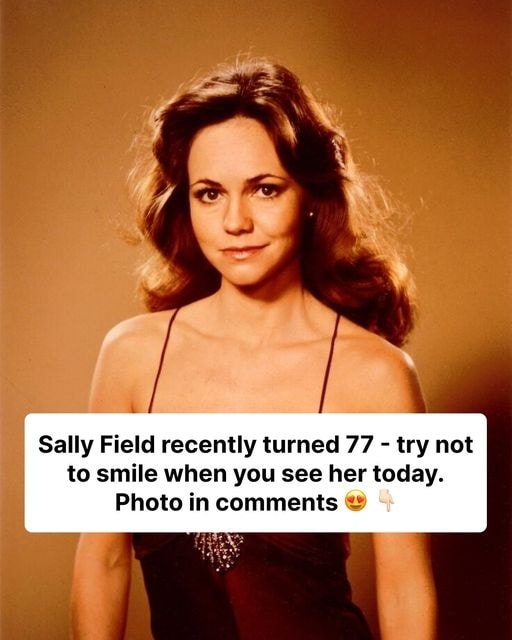
Sally Field, an Academy, Emmy, and Golden Globe-winning actress, has captivated audiences for decades with her unforgettable roles in films and TV shows like Forrest Gump, Brothers and Sisters, Lincoln, and Steel Magnolias. At 76, Field reflects not only on her storied career but also on the personal challenges that have shaped her life. Her 2018 memoir, In Pieces, offered an unflinching look at her experiences, including sexual abuse by her stepfather and struggles with depression, self-doubt, and loneliness.
The Early Years
Born on November 6, 1946, in Pasadena, California, Sally Field grew up in a family touched by show business. Her mother, Margaret Field, was an actress, while her father, Richard Dryden Field, worked as a salesman. After her parents divorced, her mother married actor and stuntman Jock Mahoney. Sally, her brother Richard, and their half-sister, Princess O’Mahoney, lived in a complex household dynamic.
Field’s career began in 1965 with the titular role in the sitcom Gidget. Though the series was canceled after one season, it marked the start of a long and prolific career. She gained greater visibility starring in The Flying Nun, which ran for three seasons. Field later admitted she struggled during this time, battling depression while navigating a role she disliked. “I just had to put my head down and go to work and do the very best job I could,” she recalled.
Field’s big-screen debut came in 1967 with The Way West. A decade later, her role in Smokey and the Bandit alongside Burt Reynolds catapulted her to stardom. The 1979 drama Norma Rae earned her first Academy Award, followed by a second Oscar for Places in the Heart in 1984. Field’s portrayal of the loving yet strong-willed mother in 1994’s Forrest Gump, a film that won six Oscars, remains one of her most iconic performances.
A Complicated Personal Life
Sally Field’s personal life has been as complex as her career. She married Steven Craig in 1968, and the couple had two sons, Peter and Eli, before divorcing in 1975. Her second marriage to Alan Greisman in 1984 produced a son, Samuel, but ended in 1994.
Field’s romantic relationship with Burt Reynolds, which lasted from 1976 to 1980, was tumultuous. In her memoir, she described Reynolds as controlling and manipulative, revealing how he convinced her to skip the Emmy ceremony where she won for Sybil. The two hadn’t spoken for 30 years before Reynolds’ death in 2018.
In In Pieces, Field also opened up about the abuse she endured from her stepfather, Jock Mahoney, during her teenage years. Her mother, she later discovered, had known about the abuse but chose to believe Mahoney’s false claims that it happened only once while he was drunk. Writing the memoir, Field explained, was her way of understanding her mother and ultimately finding forgiveness. “It was the only way I was going to find the pieces of my mother that I couldn’t put together,” she shared.
A Lasting Legacy
Today, Sally Field treasures time spent with her grandchildren, often playing video games with them in the same room where she keeps her Oscars and Emmys. Despite her illustrious career, Field shows no signs of slowing down. Her recent film Spoiler Alert and her role in the 2023 release 80 for Brady are testaments to her enduring passion for storytelling.
Director Steven Spielberg, who worked with Field on Lincoln, praised her legacy: “As an actor, she dared this town to typecast her, and then simply broke through every dogmatic barrier to find her own way — not to stardom… but to great roles in great films and television. Through her consistently good taste and feisty persistence, she has survived our ever-changing culture, stood the test of time, and earned this singular place in history.”
Sally Field’s journey is a testament to resilience, talent, and the power of authenticity, leaving an indelible mark on both Hollywood and the hearts of her audience.
Incredible Hair Growth Remedy: Bay Leaves Oil
If you’re looking for a natural solution to promote hair growth and prevent hair loss, bay leaves oil might be the secret you’ve been searching for. Bay leaves are rich in nutrients and antioxidants that can contribute to healthier, stronger hair when used regularly. Here’s how you can make and use bay leaves oil at home to nourish your hair and stimulate growth.
Ingredients:
- A handful of dried bay leaves
- 1 cup of coconut oil or olive oil (as a base)
Instructions:
Prepare the Oil Infusion:
- Place the dried bay leaves in a pot and cover them with the coconut oil or olive oil. You can choose between coconut oil, which is great for nourishing and moisturizing, or olive oil, which is excellent for strengthening and adding shine.
Heat the Mixture:
- Heat the mixture over low heat for about 10-15 minutes. Avoid letting the oil boil; a gentle simmer is enough to infuse the oil with the properties of the bay leaves.
Let It Steep:
- After heating, remove the pot from the stove and let the oil cool completely. It’s best to allow the bay leaves to steep in the oil for several hours or even overnight to maximize the infusion.
Strain the Oil:
- Once the oil has cooled and steeped, strain it through a fine mesh strainer or cheesecloth to remove all pieces of bay leaf. Pour the strained oil into a clean, airtight bottle or jar for storage.
Application:
- To use the bay leaves oil, massage it into your scalp and hair. Start at the scalp and work the oil through to the ends of your hair. Massaging helps improve blood circulation to the scalp, enhancing hair growth.
Leave It On:
- For best results, leave the oil in your hair for at least an hour or overnight if possible. Cover your hair with a shower cap to avoid staining pillowcases.
Wash Out:
- Wash your hair with your regular shampoo and conditioner after the treatment. You might need to shampoo twice to remove all the oil if your hair feels too greasy.
Benefits:
- Promotes Hair Growth: Bay leaves are rich in antioxidants that help stimulate hair follicles and promote stronger and faster hair growth.
- Prevents Hair Loss: The nutrients in bay leaves strengthen hair from the root, making it less prone to falling out.
- Improves Hair Health: Regular use of bay leaves oil can improve the overall health of your hair, making it shinier, softer, and more resilient.
Frequency:
- Use this treatment once or twice a week for the best results in promoting hair growth and preventing hair loss.
This natural remedy is a fantastic way to harness the power of bay leaves for hair care. It’s easy to prepare and use, making it a cost-effective and efficient method to maintain the health and beauty of your hair. Try incorporating bay leaves oil into your hair care routine and see the difference it can make!




Leave a Reply