John Barrymore came from a long line of theater actors. He himself first appeared on stage alongside his father in 1900, and in 1903 officially began his career, starring in the likes of Justice (1916) and Richard III (1920). His greatest role was his 1992 appearance in Hamlet, for which he was dubbed “the greatest living American tragedian.”
Barrymore also starred in a slew of silent films, most notably Dr. Jekyll and Mr. Hyde (1920), Sherlock Holmes (1922) and Beau Brummel (1924). He later made the transition to sound movies, starring in the likes of Grand Hotel (1932) and Midnight (1939).
On May 29, 1942, Barrymore died at the age of 60 from pneumonia and cirrhosis. What happened next has been the subject of many rumors. It’s alleged his friends, Errol Flynn, W.C. Fields and Sadakichi Hartmann snuck into the morgue where his body was being held, propped him up against a poker table and allowed him to experience one final celebration.
As it turns out, these rumors are true! In an August 2020 episode of the popular YouTube series Hot Ones, the acting legend’s granddaughter, Drew Barrymore, revealed his corpse had actually been stolen.
“Not only yes, but there have been cinematic interpretations of it,” she exclaimed. Those interpretations include S.O.B., starring Julie Andrews, and allegedly the 1989 comedy Weekend at Bernie’s, in which two friends pretend their deceased boss is alive.
Barrymore added that she wants the same to happen to her. “I will say this, I hope my friends do the same for me. That is the kind of spirit I can get behind. Just prop the old bag up, let’s have a few rounds.

“I think death comes with so much morose sadness and I understand that, but if it’s okay, just for me, if everybody could be really happy and celebratory and have a party, that would be my preference.”
Vintage Hollywood certainly was a different era…
Shоuld Yоu Rinsе Grоund Вееf?
When it comes to cooking up a storm in the kitchen, ground beef is a culinary superhero. From tacos to spaghetti, this versatile ingredient has the power to turn a simple meal into a flavor-packed feast. But there’s a lingering question that divides kitchen warriors: Should you rinse your ground beef before cooking (or after)?
Some kitchen enthusiasts swear by rinsing their ground beef before (and after) cooking, and they have a few compelling reasons. First and foremost, rinsing can help reduce the fat content of the meat. If you’re trying to cut down on calories or simply want a leaner dish, giving your ground beef a quick rinse under hot water might be the trick.
Rinsing can also help eliminate excess grease, preventing your dish from turning into an oily mess. Imagine a perfect plate of spaghetti, where the star of the show isn’t overshadowed by a pool of unwanted fat. Rinsing can be the hero that sаvеs your meal from becoming a greasy catastrophe.
On the flip side, many cooks argue that rinsing ground beef is a culinary sin. One of the primary concerns is flavor loss. When you rinse ground beef, you risk washing away not only the fat but also some of the savory juices that make your dish delicious. After all, who wants a bland and dry burger when you were aiming for a flavor explosion?
Another point against rinsing is that it can be a messy affair. Picture yourself at the sink, trying to juggle a pound of ground beef while hot water splashes around. It’s not the most glamorous part of cooking, and the cleanup might not be worth the potential benefits.
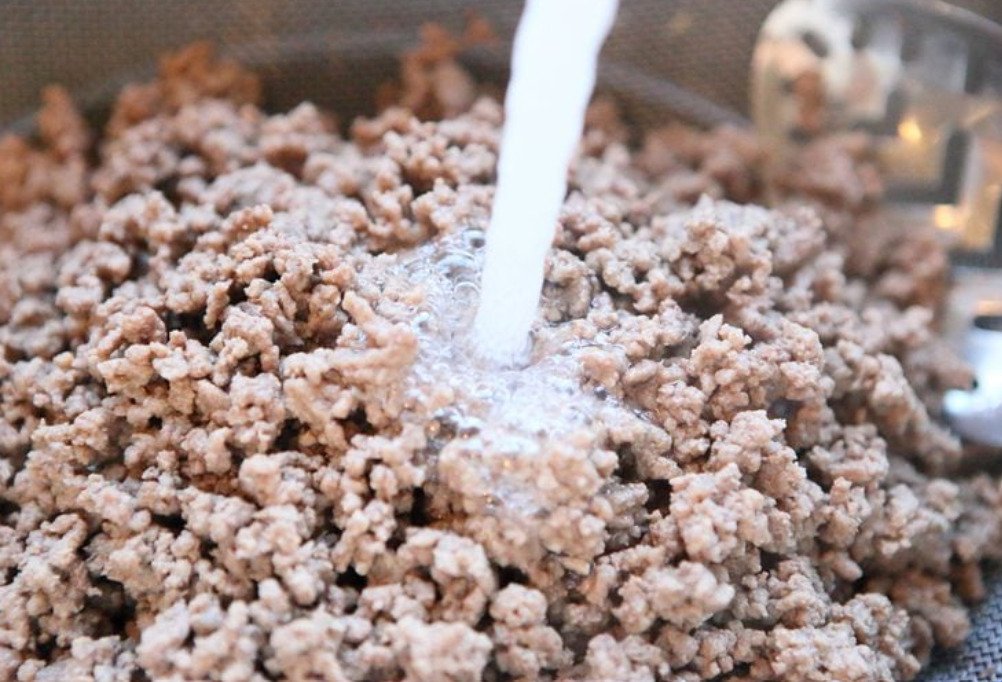
While rinsing fat from ground beef down the sink might seem likе a convenient solution, it can lead to serious plumbing issues. As the fat cools, it solidifies and can clog pipes over time. This creates a recipe for disaster, potentially causing blockages, slow drainage, and even the need for costly plumbing repairs.
Dispose of fat from ground beef by letting it cool and solidify, then scrape it into a sealable container. Toss the container in the trash, preventing plumbing issues caused by pouring fat down the sink. Proper disposal ensures a smooth-running kitchen and avoids potential pipe blockages.
So, should you rinse your ground beef? The answer depends on your culinary goals and personal preferences, but our short answer is no. If you’re a flavor enthusiast who wants every drop of deliciousness, skipping the rinse is the way to go.
Whether you’re Team Rinse or Team No-Rinse, the most important thing is to enjoy the process of creating mouthwatering meals. In the end, the choice is yours.



Leave a Reply